Going by the questions we are often asked about the bucket trucks we hire and sell, there is a lack of understanding about what the safest way is to operate, especially when setting up on a slope or uneven ground. Operating a truck mounted EWP (or bucket truck as they are commonly known), is a complex and potentially dangerous exercise. Unsafe practices are common and whilst serious accidents are fortunately uncommon in the power and energy industry, any preventable situation where a person could get injured or even killed, is not acceptable. The Minister of Labour has been working towards reducing workplace deaths and serious injuries by at least 25 percent through the Approved Code of Practice, focused on improving safety practices and reducing workplace accidents in the industry (Worksafe, 2017).
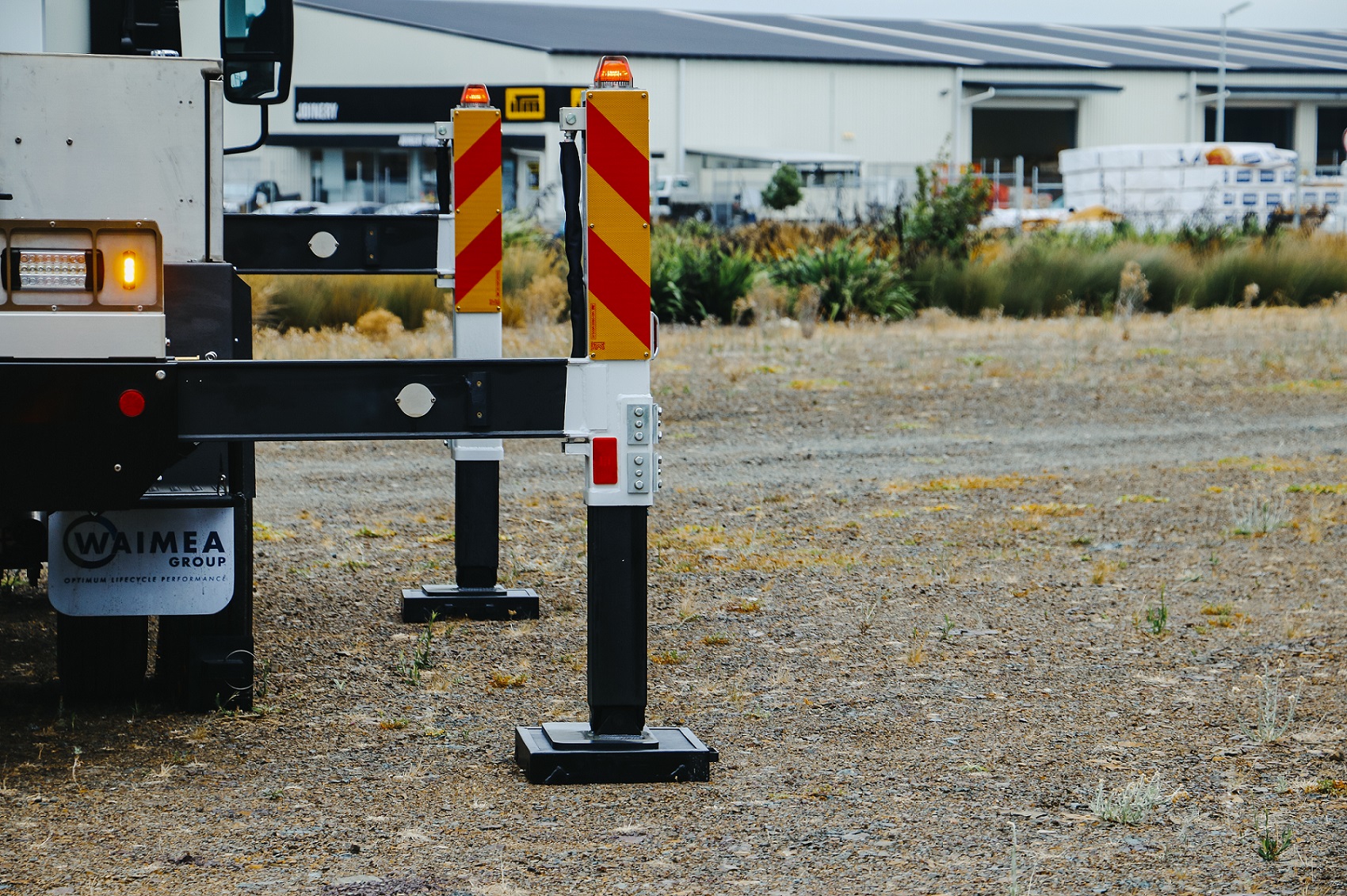
Our objective is to provide ‘real world’ advice on the safe and efficient method to set up and operate a truck mounted EWP on sloping or uneven ground. It’s also important that we highlight the clear difference between the stabilisers on a crane truck versus the outriggers on a bucket truck – a commonly misconstrued connection being made between them when they are fundamentally different.
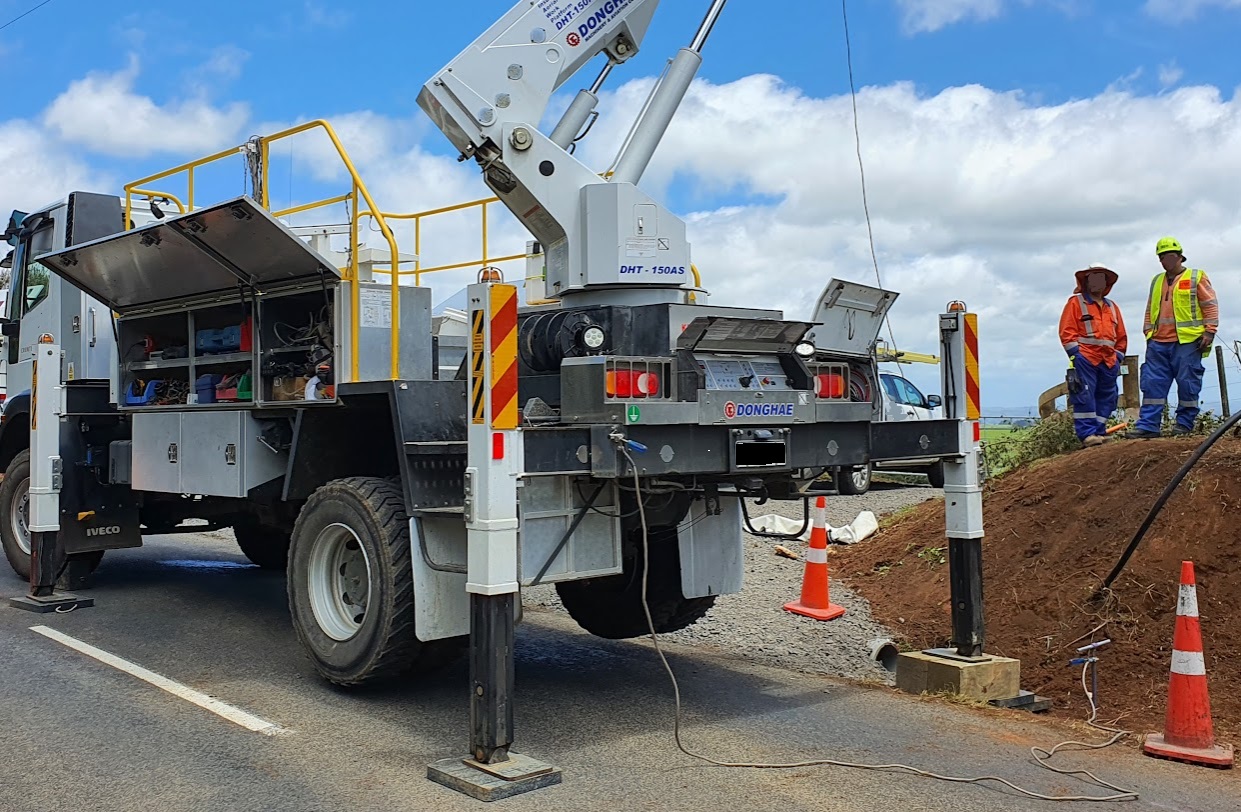
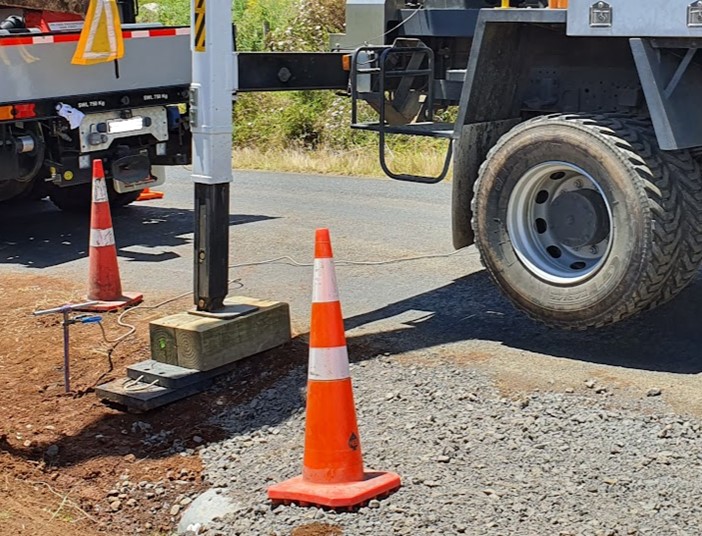
This example shows a typical, steep roadside application with a combination of both fully and partly extended outriggers plus the use of extra dunnage for correction. We have used this example as its technically correct, however there are some aspects that could be done better to mitigate risk and be more certain that the operators will go home safe at the end of the day.
Waimea have been building specialised equipment for the Power and Energy Delivery industry for many years and offers machine specific operator training with every item of equipment sold.